

How Large Should Wall Art Be Above a Sofa?
One of the most common mistakes I see in beautifully designed homes is artwork that is simply too small for the space.
Most homeowners understand that artwork should be proportional to the furniture beneath it. What many do not realize is that furniture scale is only part of the equation. Viewing distance matters just as much. A piece that looks substantial on a computer screen or in your hands can feel surprisingly small once it is hanging above a sofa.
The reason is simple. Most people are no longer standing directly in front of the artwork. They are viewing it from across the room. When distance increases, details begin to disappear.
This becomes especially important when investing in commissioned portrait artwork. Unlike decorative pieces purchased to fill a wall, portraits are deeply personal, created to tell a story, preserve a memory, and become part of a family's home for years to come. Choosing the right size helps ensure that the story can be appreciated as intended.
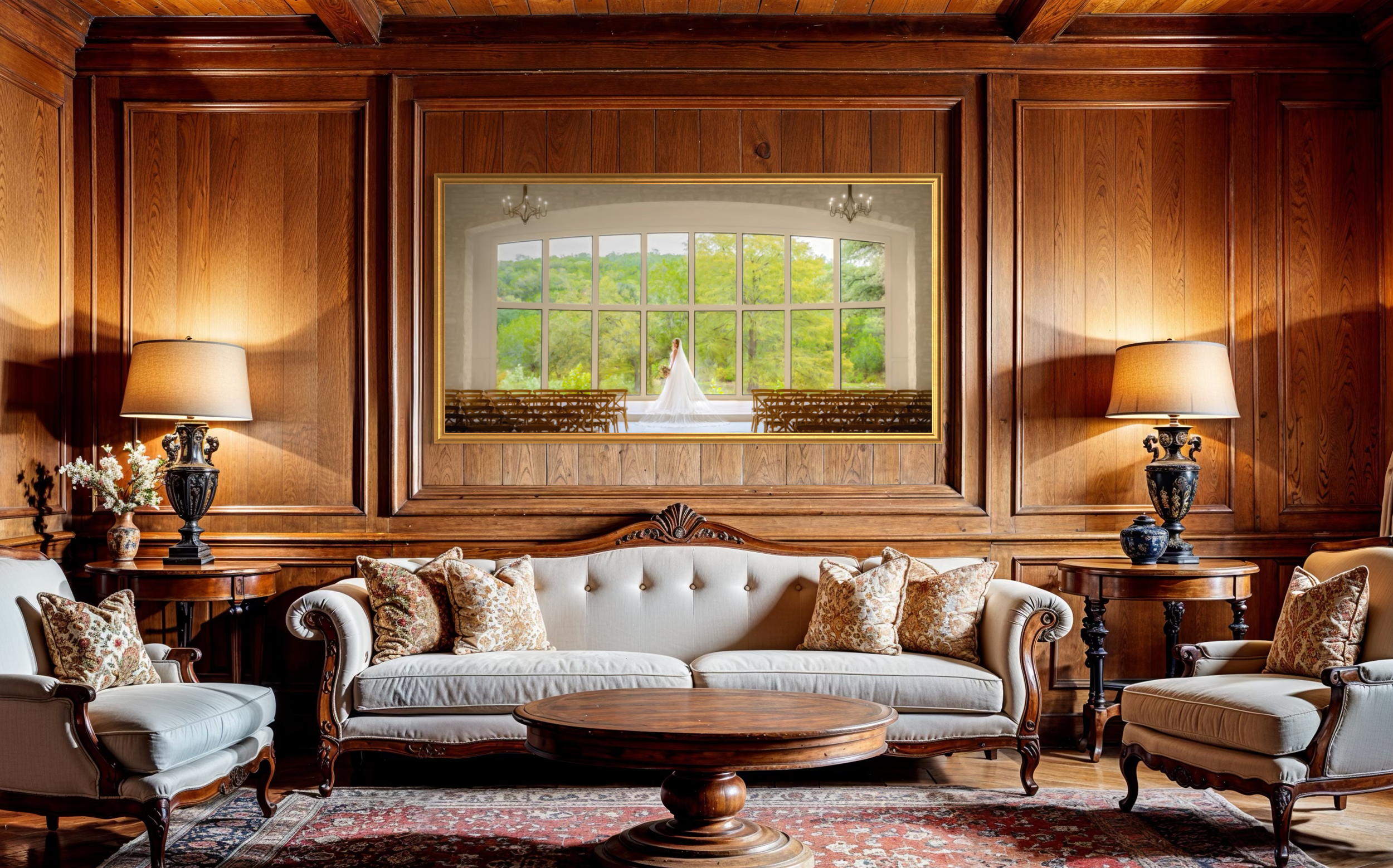
The details of the venue, gown, and hand-finished artwork remain visible and impactful from across the room.
Why Artwork Size Matters in a Living Room
When most people think about artwork size, they focus on whether it looks balanced above the furniture. While that is certainly important, it is only one part of the decision.
Artwork is meant to be experienced, not simply displayed.
Imagine standing just a few inches away from an original work of art. You can see every detail. You notice expressions, textures, subtle finishing touches, and artistic elements that may not be obvious at first glance. As you move farther away, many of those details become less noticeable.
The farther viewers are from a piece, the larger the artwork needs to be in order to create the same visual impact.
This is why artwork that seems perfectly sized in a design sample can sometimes feel underwhelming once it is installed in a room. The artwork itself has not changed, but the viewing distance has.
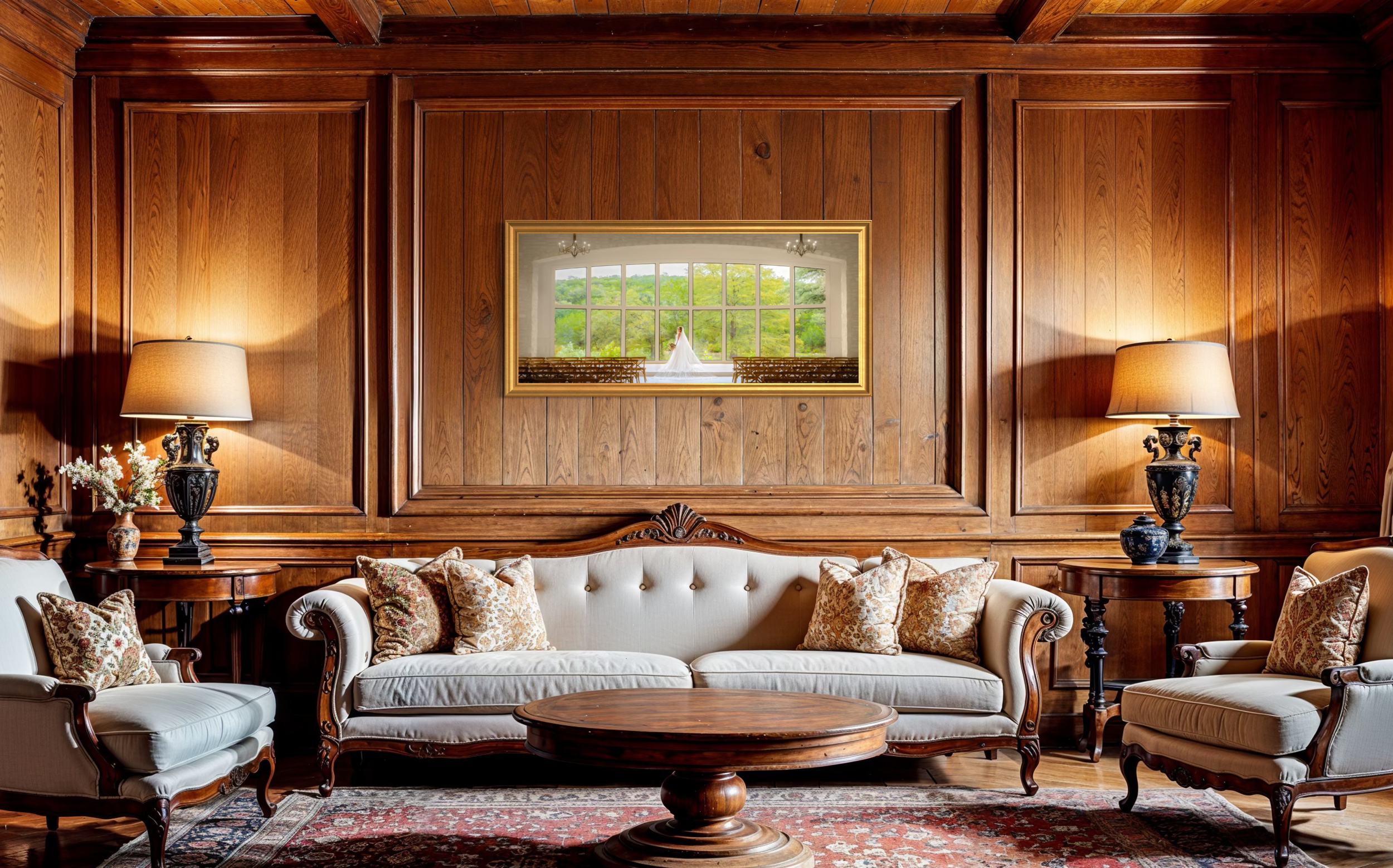
Both examples feature the same portrait. The difference is not the artwork itself, but the viewing experience. Larger artwork allows viewers to appreciate the details, texture, and craftsmanship from normal viewing distances throughout the room.
Considering Commissioned Artwork?
The Heirloom Portrait Guide answers the questions most families have before commissioning artwork, including scale, investment, timeline, and what to expect throughout the process.
The Details Matter
When I create a Heidi Knight Original mixed-media portrait, the artwork is designed to reward closer inspection. The texture within the piece, the hand embellishments, the artistic finishing work, and the subtle details throughout the image all contribute to the final result.
These elements are part of what transforms a portrait into original artwork.
In a bridal portrait, that might include the intricate details of a veil and gown, the architecture of a venue, the landscape beyond a window, or the way light falls across the scene. In a family portrait, it may be the expressions, interactions, and small details that reflect a family's personality and relationships.
When artwork is displayed too small, many of those details become difficult to appreciate from normal viewing distances. The portrait remains recognizable, but much of what makes it special becomes harder to experience. The farther a viewer stands from the artwork, the larger the piece must be to deliver the same visual experience.
A Real Example
Consider the bridal portrait shown here.
In the larger installation, viewers can appreciate far more than the bride herself. The venue becomes part of the story. The architecture, natural light, surrounding landscape, and details within the gown all contribute to the finished artwork. Even from across the room, the portrait maintains its presence and invites viewers to explore the details.
Now compare that experience to the smaller version of the same artwork.
The bride remains visible, but many of the details become secondary. Her face and gown, plus the texture, craftsmanship, and environmental elements that help tell the story, are far less noticeable from a typical viewing distance.
Neither piece is technically wrong.
However, one allows the artwork to be fully experienced within the space, while the other requires viewers to move much closer to appreciate what makes the piece unique, which is more difficult when the piece is behind a sofa.
Finding the Right Balance
As a general guideline, artwork displayed above a sofa often looks best when it occupies approximately two-thirds to three-quarters of the furniture width beneath it. This creates visual balance and allows the artwork to feel connected to the room rather than floating independently on the wall.
That guideline provides a helpful starting point, but every home is different.
Ceiling height, room dimensions, furniture placement, wall space, and viewing distance all influence what size will feel most appropriate. A large open room often benefits from larger artwork because viewers naturally spend more time seeing the piece from farther away.
For this reason, I design artwork with the finished installation in mind from the very beginning. The goal is never simply to fill a wall. The goal is to create a piece that feels perfectly at home within the space while allowing every detail to be appreciated.
Why Larger Artwork Often Creates More Impact
Many homeowners initially worry that a larger artwork will overwhelm a room. In practice, the opposite is often true.
When artwork is properly scaled, it creates confidence within a space. It establishes a focal point, anchors the room, and allows viewers to fully appreciate the craftsmanship and detail within the piece. Most clients are surprised by how naturally a larger portrait fits once it is installed.
What felt large during the planning stage often feels exactly right on the wall.
Family portrait artwork is unlike most decorative pieces. It tells your story. It celebrates the people who matter most. It becomes part of the home itself. Choosing the right size ensures that the artwork can be appreciated not only today, but for years to come.
When thoughtfully designed and properly scaled, portrait artwork becomes more than something you hang on a wall. It becomes one of the most meaningful pieces in your home.
Planning Artwork for Your Home?
Every commission begins with a design consultation where we evaluate your space, discuss viewing distances, and recommend artwork sizes that complement both your home and the story you want to preserve.
Whether you are considering a bridal portrait, family portrait, or multi-generational commission, thoughtful planning ensures the finished artwork feels perfectly at home in your space.
