

What Does It Tell a Child When They See Themselves Displayed in Their Home?
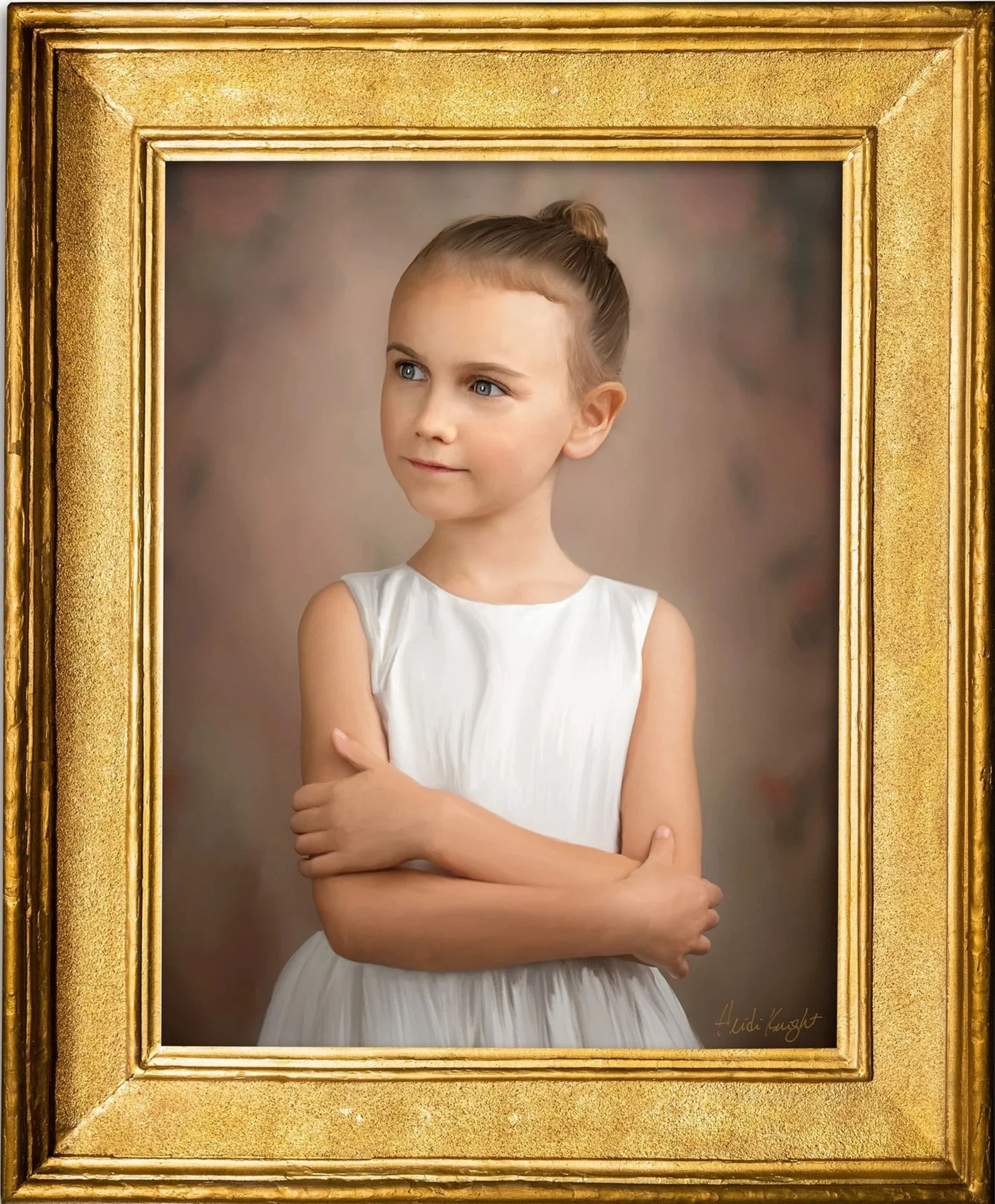
Walk through almost any family home and you will learn something about the people who live there. You may see books that have been read and reread, furniture chosen because it fits the way the family gathers, heirlooms passed down from grandparents, or artwork selected because it brings beauty to an ordinary room. Homes become quiet biographies. They tell the story of what a family values, what it protects, and what it wants to keep close.
That is one reason I have always believed portraits matter. Not because every wall needs to be filled, and not because a portrait is more important than the relationships inside the home. A portrait cannot create love where love is absent. But in a family already rich with affection, stories, and connection, a thoughtfully created portrait can become one of the visible ways that love is expressed. It gives a child a place of honor inside the home and says, in a quiet but lasting way, you belong here.
This is especially true with children. A child may not understand archival canvas, hand finishing, composition, or why a portrait was created as commissioned artwork. What a child understands is simpler. They notice what receives attention. They notice what is protected, framed, displayed, and spoken about. When they see themselves represented beautifully and intentionally in the family home, the message is not subtle. This family values me. This season of my childhood matters.
The Home Is One of a Child's First Mirrors
Children learn who they are through thousands of small experiences. Some of those experiences are direct: the way parents speak to them, the way grandparents greet them, the stories told at the dinner table, and the expectations adults place on them. Other messages are less obvious but still meaningful. Children notice what is celebrated in the family, what is remembered, and what is given a permanent place.
A home filled only with generic decoration can still be beautiful, but it may not tell much of a family story. A home that includes family portraits, inherited pieces, favorite books, handwritten recipes, travel memories, or meaningful artwork begins to feel different. It tells children that their family has a history. It tells them they are part of something larger than this one day, this one season, or this one stage of childhood.
This is not about vanity or making a child the center of the universe. It is about belonging. A portrait displayed with care is not saying, look how perfect this child is. It is saying, this child is loved, known, and worth remembering. That is the heart behind the Children's Portraits created at Heidi Knight Fine Art.
Portraits Become Invitations to Tell Stories
One of the most important things a portrait can do is begin a conversation. A child walks past it and asks about the day it was created. A grandmother remembers what the child was like at that age. A parent says, this was the year you loved that dress, or that was right before you started kindergarten, or you used to tell the most elaborate stories about the animals in the yard. The portrait becomes more than an object on the wall. It becomes a doorway into family memory.
Developmental psychologists Robyn Fivush and Marshall Duke have written extensively about the importance of family stories. Their work on family narratives suggests that children who know more about their family history often show stronger emotional well-being and a clearer sense of identity. An accessible summary from Emory University explains how family stories can help children weather hard times, and their research article Do You Know? The power of family history in adolescent identity and well-being discusses how family history and narrative are connected with adolescent identity.
The portrait itself is not the same thing as a family story, of course. It is not magic, and it should not be asked to do the work of parenting. But it can become a powerful prompt. It gives adults something visible to point to when they tell the child who they were, how they were loved, and what made that season of life memorable. Over time, those conversations become part of the child's understanding of themselves.
Photographs and Portraits Help Children Hold Onto Memory
Most families today have thousands of photographs, and I think that is wonderful. Everyday photographs preserve birthday candles, muddy shoes, vacations, loose teeth, school programs, and ordinary afternoons that become precious with time. Those pictures matter because childhood is not remembered only through major milestones. It is remembered through repetition, conversation, and the visual cues that help bring a story back to life.
Research on autobiographical memory supports the idea that memory develops through social interaction and narrative. In The Development of Autobiographical Memory, Robyn Fivush describes autobiographical memory as part of a developing life narrative. Work on parent-child reminiscing also shows that the way families talk with children about past events influences how children organize and recall their own experiences. A related article on family reminiscing style discusses how family conversations about past experiences are connected with children's autobiographical memory.
That is one reason printed photographs and portraits still matter in a digital age. A phone may contain thousands of images, but a child usually has to be handed the phone, shown the album, and invited into the memory. A portrait on the wall lives differently. It is present without being requested. It becomes part of the daily landscape of home, quietly available to spark questions, comments, memories, and stories.
This is also why I believe the best portraits are not simply pretty. A truly meaningful portrait should feel specific to the child. It should preserve something a parent or grandparent would recognize immediately: the way a child holds herself, the expression that appears right before a laugh, the seriousness that comes over a face when imagination takes over, or the softness of early childhood just before it begins to change.
The Messages Children Receive Often Become the Stories They Carry
Children are not formed by one portrait, one compliment, one criticism, or one afternoon. They are shaped over time by repeated messages, relationships, opportunities, and expectations. I want to be careful here because it would be too simplistic to say that a portrait creates confidence or that a child's entire sense of self comes from what is hanging on the wall. Human development is more complex than that.
At the same time, the messages children repeatedly receive do matter. Research on self-fulfilling prophecies and expectations, especially in educational settings, has shown that adult expectations can influence children's outcomes, although the effects are often nuanced and sometimes smaller than people assume. The review Teacher Expectations and Self-Fulfilling Prophecies by Lee Jussim and Kent Harber is useful because it does not exaggerate the effect. It acknowledges that self-fulfilling prophecies can occur while also explaining that child development is shaped by many interacting factors.
For families, I think the practical takeaway is simple and deeply human. Children listen to what we call them. They notice what we expect of them. They absorb whether they are treated as capable, interesting, loved, and worthy of attention. A portrait cannot replace those daily messages, but it can echo them. It can become one visible reminder among many that a child is not an afterthought in the home.
That matters because children often grow into the stories they are repeatedly told about themselves. If a child is always described as difficult, dramatic, careless, or less capable, those labels can become heavy. If a child is consistently shown that they are loved, capable, cherished, and part of a family that delights in them, those messages can also take root. A portrait is one quiet way to reinforce the better story.
Why a Formal Portrait Still Matters
Many families hesitate over the word formal. They imagine something stiff, fancy, or uncomfortable, and that is not usually what they want for their children. I understand that completely. The goal of a fine art child's portrait is not to make childhood look artificial or overly polished. The goal is to create something intentional enough to last.
There is a difference between formal and significant. Formal can feel distant. Significant feels worthy of care. When I create a child's portrait, I am not trying to turn a four-year-old into a miniature adult or remove the liveliness that makes childhood beautiful. I am trying to preserve the child in a way that will still feel meaningful in twenty, thirty, or fifty years.
That is why the conversation before a portrait matters so much. We talk about the child's personality, the home where the artwork will live, and the feeling the family wants to preserve. Some portraits are quiet and painterly. Some are more expressive. Some are designed for a living room, an entry, a staircase, a bedroom, or a grandmother's home. The finished artwork should feel like it belongs both to the child and to the family. More about this approach can be found on the Families and Children's Portraits pages.
What a Grandparent May Understand First
I think grandparents often understand this before anyone else. A first-time grandmother, especially, is living in a new season of life. She has already watched how quickly children grow. She knows that the baby stage disappears, the toddler years rush by, and the preschool years somehow vanish between one holiday and the next. She also knows that the things we choose to preserve become part of what grandchildren remember about us.
A grandmother commissioning a portrait of a grandchild is not simply buying a photograph. She is creating a piece of family history. She is choosing to preserve a season she knows the child may not fully remember without help. Years later, that portrait may become part of the grandchild's memory of visiting her home, walking through her hallway, seeing their own face displayed with honor, and hearing the stories that grew around it.
That is one reason I am especially drawn to portraits of children around four years old. They are still little enough to carry the softness and wonder of early childhood, but old enough for their personalities to fill the room. They have opinions, imagination, humor, and a way of being completely themselves before self-consciousness begins to creep in. It is not the only meaningful age for a portrait, but it is one of the seasons I would choose if I could preserve only one.
From Heidi's Studio
After nearly twenty years of creating portraits, I have noticed something that no research paper can fully measure. Children recognize when they have been given a place of importance. Sometimes they point to themselves with delight. Sometimes they bring someone into the room to show them. Sometimes, years later, the portrait becomes so familiar that they stop commenting on it entirely, not because it no longer matters, but because it has become part of home.
That is one of my favorite things about heirloom portraiture. The artwork begins as a commission, but if it is created well, it eventually stops feeling like a purchase. It becomes woven into the family. It hangs through birthday parties, holidays, ordinary mornings, teenage years, and all the changes no one can slow down. Visitors may admire it, but the deeper value belongs to the people who live with it every day.
I do not believe children need to grow up surrounded by portraits of themselves on every wall. That is not the point. But I do believe there is something deeply meaningful about choosing at least one season of childhood and preserving it with care. Not because the child was perfect. Not because the family needed something formal. Because childhood is brief, memory is fragile, and love deserves visible evidence.
Frequently Asked Questions
Can a portrait really affect a child's sense of self?
A portrait alone cannot create a child's confidence, self-worth, or emotional security. Those are built primarily through loving relationships, consistent care, meaningful conversation, and repeated experiences over time. A portrait can, however, become one visible expression of those messages inside the home. It can reinforce a child's sense of belonging when it is part of a broader family culture of love, storytelling, and connection.
Is this article saying every child needs a formal portrait?
No. Families preserve childhood in many meaningful ways, including everyday photographs, family stories, albums, videos, keepsakes, and traditions. A commissioned portrait serves a different purpose. It is created as lasting artwork for the home, designed to preserve one season of childhood with intention and permanence.
What age is best for a child's portrait?
Every stage has value, but around four years old is one of my personal favorites. At that age, children are expressive, imaginative, and still wonderfully little, but they are beginning to show the personality their family will remember for years. Other meaningful ages include the sitting baby stage, the preschool years, early adolescence, and the senior year before leaving home.
What if we never created portraits for our older children?
It is never too late to begin. Many families worry that starting now means they missed something earlier, but the purpose of heirloom artwork is not to correct the past. It is to honor the family as it exists today. Future portraits can grow from that beginning and become part of a family tradition over time.
Continue Reading in the Studio Journal
Why Families Commission Artwork Instead of Simply Buying More Digital Files explores the difference between documenting daily life and creating artwork meant to live in the home.
How to Design a Gallery Wall Around One Statement Portrait looks at how one meaningful portrait can become the anchor for a collected family display.
The Childhood Portrait Families Treasure Most continues the conversation about why certain seasons of childhood become especially meaningful to preserve.
Portraits That Become Family Heirlooms considers why some portraits gain meaning as they move from one generation to the next.
Explore Heidi Knight Fine Art
Learn more about Children's Portraits, Family Portraits, Formal Portraits, and the artist's background on About Heidi. For common questions about the portrait experience, visit Frequently Asked Questions.
Ready to Begin?
Every Heidi Knight Original begins with a conversation about your family, your home, and the season of life you most want to preserve. If you are beginning to think about a portrait that will be lived with, talked about, and treasured for generations, you may schedule a consultation.
Join The Heirloom Journal
The Heirloom Journal is an occasional letter from the studio with portrait planning ideas, stories behind recent commissions, home display inspiration, and first access to future commission availability. If thoughtful artwork and family tradition matter to you, I would be honored to have you join. Add your newsletter signup button or form here: Join The Heirloom Journal.
References and Further Reading
How family stories help children weather hard times, Emory University, featuring Robyn Fivush's work on family stories and resilience.
Do You Know? The power of family history in adolescent identity and well-being, Marshall Duke, Amber Lazarus, and Robyn Fivush.
The Development of Autobiographical Memory, Robyn Fivush, Annual Review of Psychology.
Family Reminiscing Style: Parent Gender and Emotional Focus in Relation to Child Well-Being, Robyn Fivush and colleagues.
Autobiographical Memory and Narrative in Childhood, Cambridge University Press.
Teacher Expectations and Self-Fulfilling Prophecies, Lee Jussim and Kent D. Harber.
